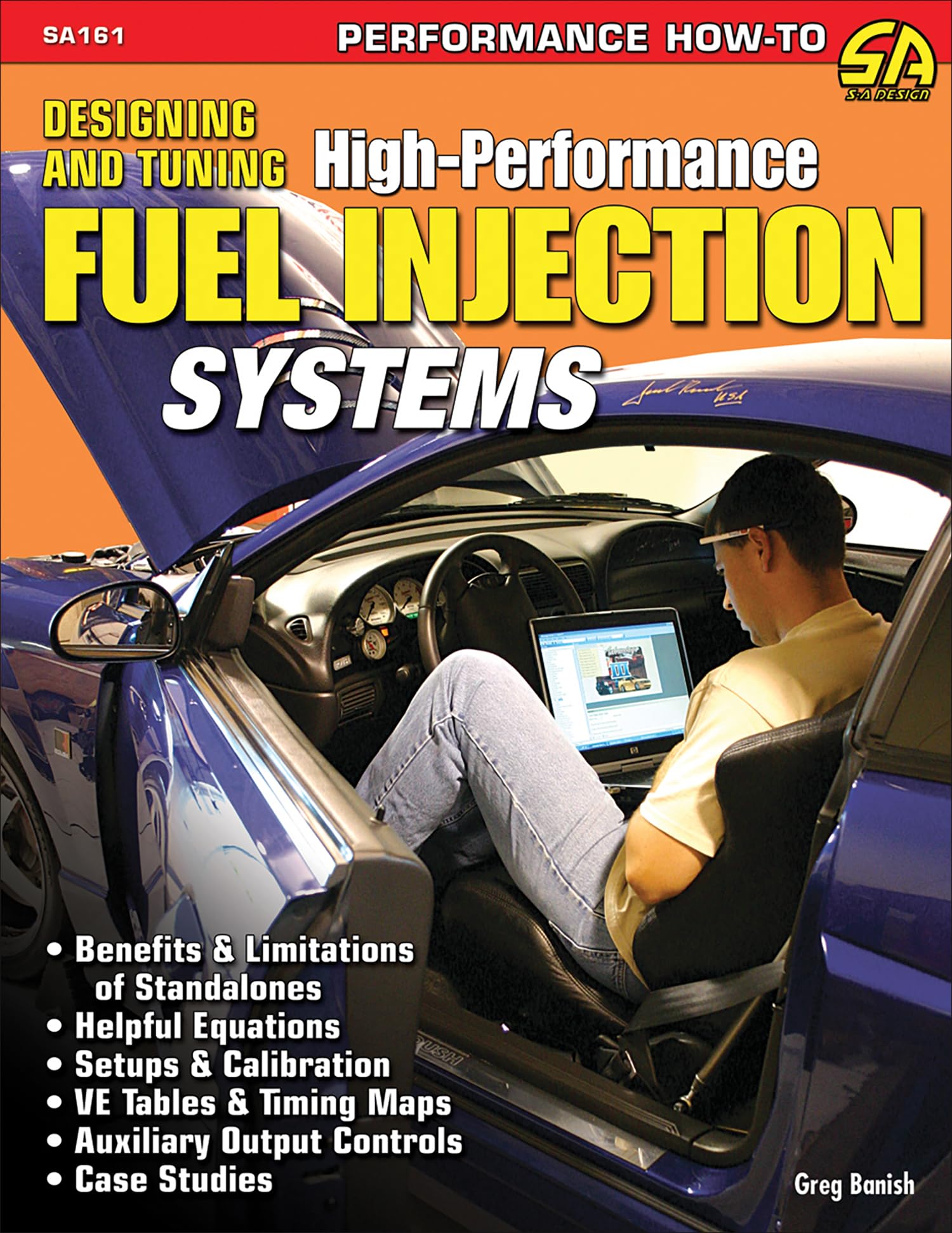
This book offers a thorough examination of the process behind designing and tuning high-performance fuel injection systems. It begins with the core concepts of fuel delivery, covering the roles of electric fuel pumps, injector sizing, and pressure regulation. The text then progresses into more advanced topics such as intake manifold design, air metering, and fuel mapping. Emphasis is placed on understanding the interaction between fuel systems and overall engine dynamics for both naturally aspirated and forced induction engines.
Design & Tune Fuel Injection Systems Great Deal at Amazon
Automotive Enthusiast Merchandise
Designing & Tuning High-Performance Fuel Injection Systems
$33.00
The price is for reference only, the actual price shall be subject to that on Amazon.
Design & Tune Fuel Injection Systems – Great Deal at Amazon.
Comprehensive guide on designing and tuning high-performance fuel injection systems. Covers ECU, sensors, air-fuel ratio, and calibration strategies. Ideal for engineers and enthusiasts seeking reliable performance upgrades. Available at a great value price on Amazon.
Product Description
A significant portion of the book is dedicated to electronic control systems. It explains how modern ECUs process sensor inputs from mass airflow sensors, manifold absolute pressure sensors, oxygen sensors, and throttle position sensors. Readers learn about open-loop and closed-loop control, adaptive fuel trims, and fail-safe strategies.
The text also details tuning procedures for part-throttle and wide-open-throttle conditions, as well as transient enrichment and deceleration fuel cut-off. Practical guidance on choosing aftermarket engine management systems and setting up data acquisition is included. The intended audience includes professional tuners, automotive engineering students, and serious hobbyists who want to deepen their knowledge of fuel injection optimization.
Real-world examples and case studies illustrate common tuning pitfalls and how to avoid them. The book emphasizes a systematic approach to calibration, stressing the need for careful data analysis and incremental adjustments to maintain engine reliability and longevity. Offered in a compact paperback edition, the book features clear illustrations, graphs, and reference tables to aid comprehension.
Despite its comprehensive scope, it is priced at a level that makes it an accessible addition to any automotive library. The content is presented in a straightforward, no-nonsense manner, focusing on factual information and proven methodologies. It remains a valuable tool for anyone involved in the development or modification of high-performance fuel systems.
Price Compare