This technical guide provides a comprehensive exploration of OpenShift Virtualization for production environments, focusing on the migration of VMware workloads and the co-location of virtual machines alongside containers. The material systematically covers core components such as KubeVirt, Migration Toolkit for Virtualization (MTV), OpenShift Data Foundation (ODF), and Advanced Cluster Management (ACM). Readers will find detailed explanations of how to plan and execute workload migrations, configure storage and networking for hybrid infrastructure, and maintain reliable operations across on-premises and hybrid cloud setups. The content is structured to build from foundational concepts to advanced topics, making it suitable for both newcomers and experienced practitioners seeking to modernize their virtualization strategy. The guide delves into the practical aspects of running virtual machines within OpenShift clusters, addressing the integration of traditional VM management with container orchestration. It describes the architecture and deployment patterns that enable seamless coexistence of containers and VMs, along with strategies for scaling and monitoring these environments. Key chapters examine the role of ODF in providing persistent storage for both VM disks and container volumes, as well as how ACM facilitates multi-cluster management and policy enforcement across distributed deployments. The instructions are grounded in real-world implementation scenarios, with attention to performance tuning, security considerations, and disaster recovery planning. This resource is designed for IT professionals, system administrators, DevOps engineers, and platform architects who are responsible for virtualized infrastructure and are exploring container integration. It assumes basic familiarity with OpenShift concepts but does not require prior experience with KubeVirt or MTV. The book’s step-by-step approach helps readers build confidence in migrating production workloads from VMware vSphere to an OpenShift-based platform, while highlighting potential pitfalls and best practices for minimizing downtime. Technical diagrams and command examples are interspersed to reinforce learning, though the focus remains on architectural decisions and operational workflows. Priced at under ten dollars, this volume offers exceptional value for professionals seeking a concentrated, no-fluff treatment of OpenShift Virtualization. It avoids unnecessary marketing language and instead delivers actionable technical content that can be applied directly in enterprise environments. The guide is formatted as a standard trade paperback, with clear chapter organization and an index for quick reference. Its brevity is deliberate—every page contributes to the central goal of equipping readers with the knowledge to implement a production-grade hybrid infrastructure using open source tools and Red Hat technologies.
Amazon OpenShift Virtualization Guide Low Price Special Offer
Networking Products
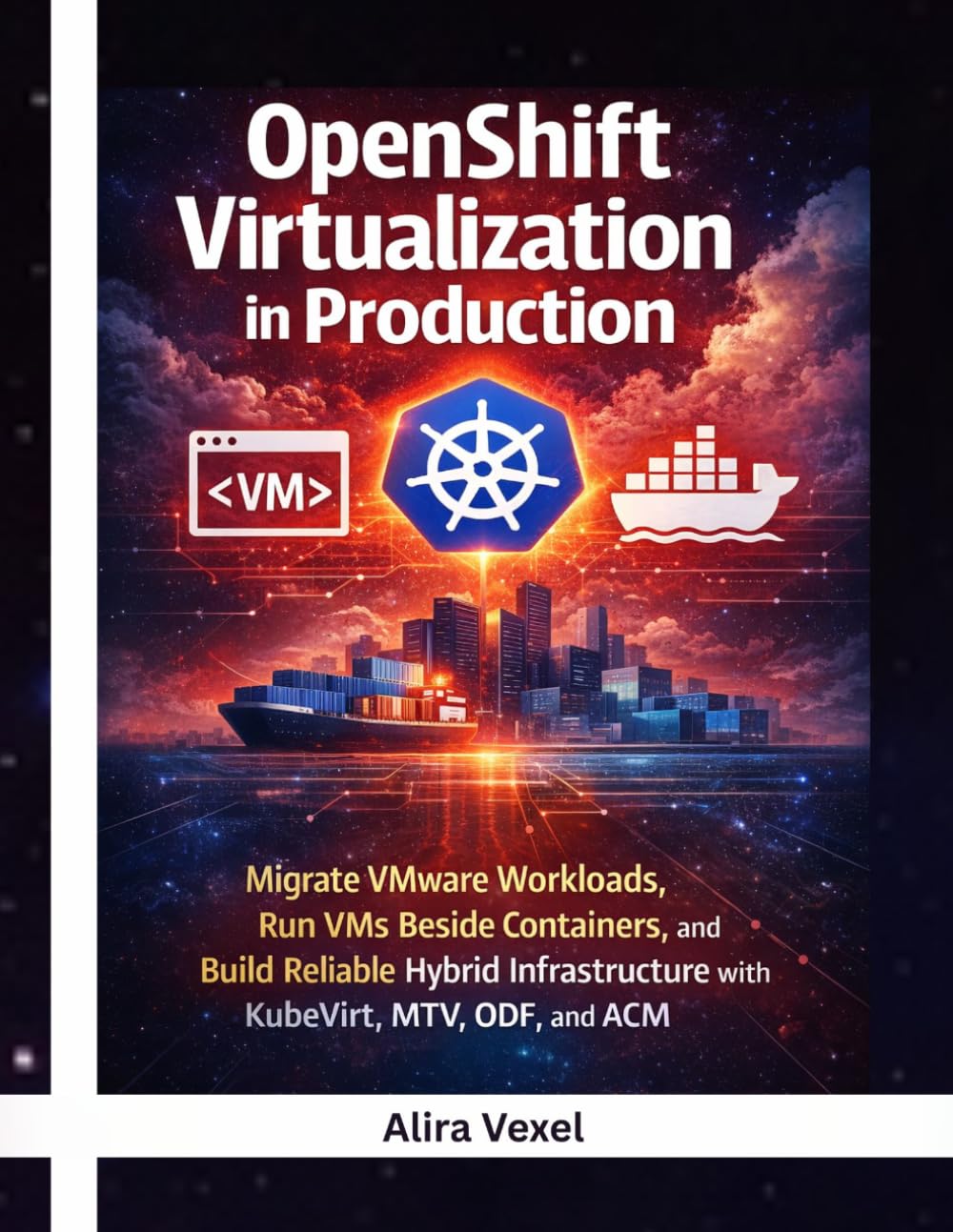
OpenShift Virtualization in Production: Migrate VMware Workloads, Run VMs Beside Containers, and Build Reliable Hybrid Infrastructure with KubeVirt, MTV, ODF, and ACM
$10.00
The price is for reference only, the actual price shall be subject to that on Amazon.
Amazon OpenShift Virtualization Guide: Low Price Special Offer.
Learn to migrate VMware workloads and run VMs with containers using OpenShift Virtualization. Covers KubeVirt, MTV, ODF, ACM. Priced affordably at $9.93, this guide offers great value for IT professionals seeking practical hybrid infrastructure knowledge.
Product Description
Ultimately, this work fills a practical niche for teams transitioning from legacy VMware setups to a more unified platform where containers and VMs coexist. By covering multiple complementary tools within a single cohesive narrative, it saves readers the effort of piecing together information from disparate sources. The combination of affordable pricing, focused scope, and technical depth makes it a worthwhile addition to any IT library focused on cloud native infrastructure modernization.
Price Compare