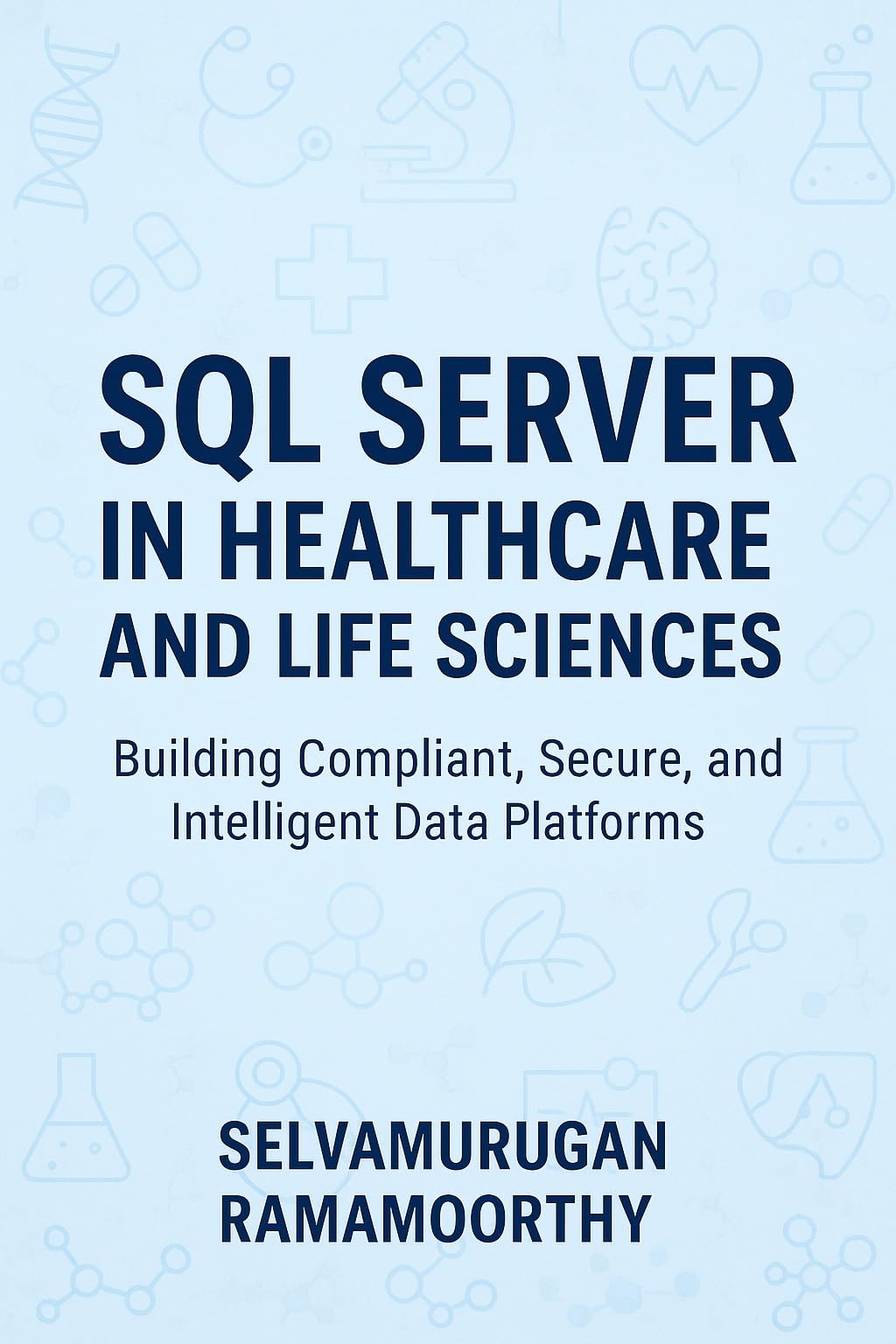
This resource provides a thorough examination of SQL Server within the context of healthcare and life sciences, focusing on the construction of data platforms that are compliant, secure, and intelligent. The content begins by outlining key regulatory requirements such as HIPAA and GDPR, then demonstrates how SQL Server features like always encrypted, row-level security, and dynamic data masking can be implemented to meet those standards. It also covers auditing and monitoring capabilities essential for maintaining compliance in clinical and research environments. The material includes practical examples of managing electronic health records, clinical trial data, and genomic information, offering a clear roadmap for integrating SQL Server with existing health information systems. Performance optimization techniques specific to high-volume transaction processing and complex analytical queries are addressed, alongside strategies for data integration using SQL Server Integration Services (SSIS) and PolyBase for big data scenarios. The guidance on high availability and disaster recovery is tailored for systems where uptime and data integrity are critical.
SQL Server in Healthcare Book Great Bargain on Amazon
Servers
SQL Server in Healthcare and Life Sciences: Building Compliant, Secure, and Intelligent Data Platforms
$1.00
The price is for reference only, the actual price shall be subject to that on Amazon.
SQL Server in Healthcare Book: Great Bargain on Amazon.
Learn to build compliant, secure, and intelligent data platforms with SQL Server for healthcare and life sciences. This affordable guide offers practical strategies for DBAs and architects. Grab great value now.
Product Description
The book also explores the use of SQL Server Machine Learning Services for predictive modeling, patient outcome analysis, and operational efficiency improvements. Each chapter is built around real-world use cases, ensuring the strategies are directly applicable to professional settings. The second portion of the book delves into the architectural decisions necessary for building scalable and secure data platforms. It discusses partitioning, indexing strategies, and columnstore indexes to optimize performance for both transactional and analytical workloads. Data governance frameworks are introduced, including master data management and data lineage tracking, which are vital for regulatory audits. The implementation of encryption at rest and in transit, along with key management practices, is thoroughly explained.
Readers will find detailed instructions on configuring SQL Server Audit, Extended Events, and policy-based management to create a robust compliance posture. The material also addresses hybrid cloud scenarios, using SQL Server in Azure for disaster recovery and elastic scaling. This section is particularly valuable for professionals looking to modernize legacy systems while maintaining security and compliance. The technical depth is balanced with clear, step-by-step guidance, making complex topics accessible to a broad audience of database administrators, data architects, and IT managers. The book is designed for individuals responsible for data management in regulated healthcare or life science organizations. It is equally useful for developers who need to build applications that interact with sensitive patient data.
The content assumes a basic familiarity with SQL Server but does not require advanced expertise in security or compliance. The author’s approach focuses on practical implementation rather than theoretical discussion, allowing readers to quickly apply the knowledge to their own environments. Whether upgrading an existing infrastructure or planning a new deployment, this guide serves as a reference for achieving compliance without sacrificing performance. The affordable price point makes it a highly accessible resource, providing substantial value compared to expensive training courses or consulting engagements. The compact yet comprehensive format enables efficient learning, with each chapter building on the previous one to form a complete picture of compliant data platform design.
The overall structure supports a structured learning path, from understanding regulatory drivers to deploying advanced SQL Server features. The book avoids unnecessary jargon and emphasizes actionable steps, making it suitable for both newcomers and seasoned professionals seeking to expand their expertise. By focusing on the intersection of healthcare regulations and SQL Server technology, it fills a niche that is often overlooked in general database literature. The cost of this guide is remarkably low, offering a wealth of information that can save organizations time and resources in developing compliant data strategies. It is a practical investment for anyone aiming to build secure, intelligent data platforms in the healthcare and life sciences domain.
Price Compare